
How to Eat for Your Menstrual Cycle: A Guide to Cycle Syncing Nutrition
Article By Naturopath Laura Hickey (BHSc)
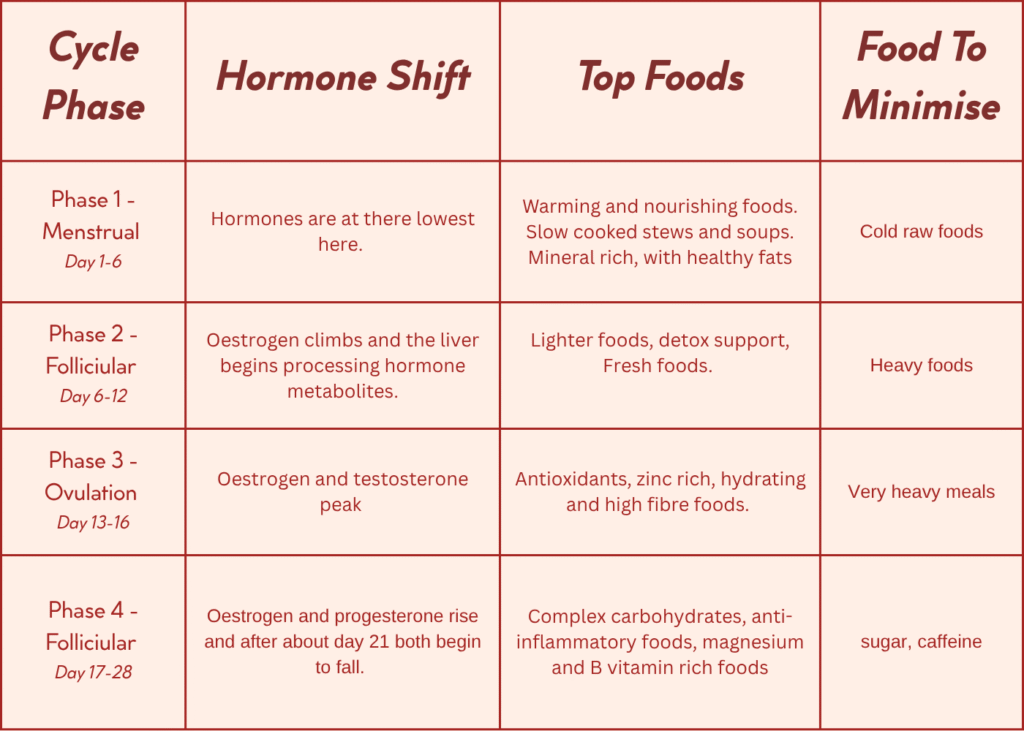
Cycle synching at a Glance
What is Cycle Syncing Nutrition?
Over the past few years I have seen a huge shift in women becoming more aware of and honouring the different phases of their menstrual cycle. As we move through the rising and falling hormones of oestrogen and progesterone, our energy, emotions and the way we interact with the world naturally change.
Developing awareness of these shifts can help us women better understand ourselves and our needs throughout the month. With this awareness we can begin to recognise when it is time to nurture and rest, when energy is rising and creativity flows, when we feel more social, and when we may need quiet reflection.
Eating for your menstrual cycle, sometimes called cycle syncing nutrition, involves adjusting foods and lifestyle to support the hormonal changes that occur during each phase of the cycle. As with anything I recommend try not to let this become too prescriptive, it should feel intuitive and flexible. Also this works best when you also tune into the energetics of each phase, listening to your body and adjusting your life according to your needs.
Many women notice improvements in energy, mood and PMS symptoms when they align nutrition and lifestyle with their body’s natural rhythm.
In this guide we explore the four phases of the menstrual cycle and the foods that best support each stage.
The Four Phases of the Menstrual Cycle
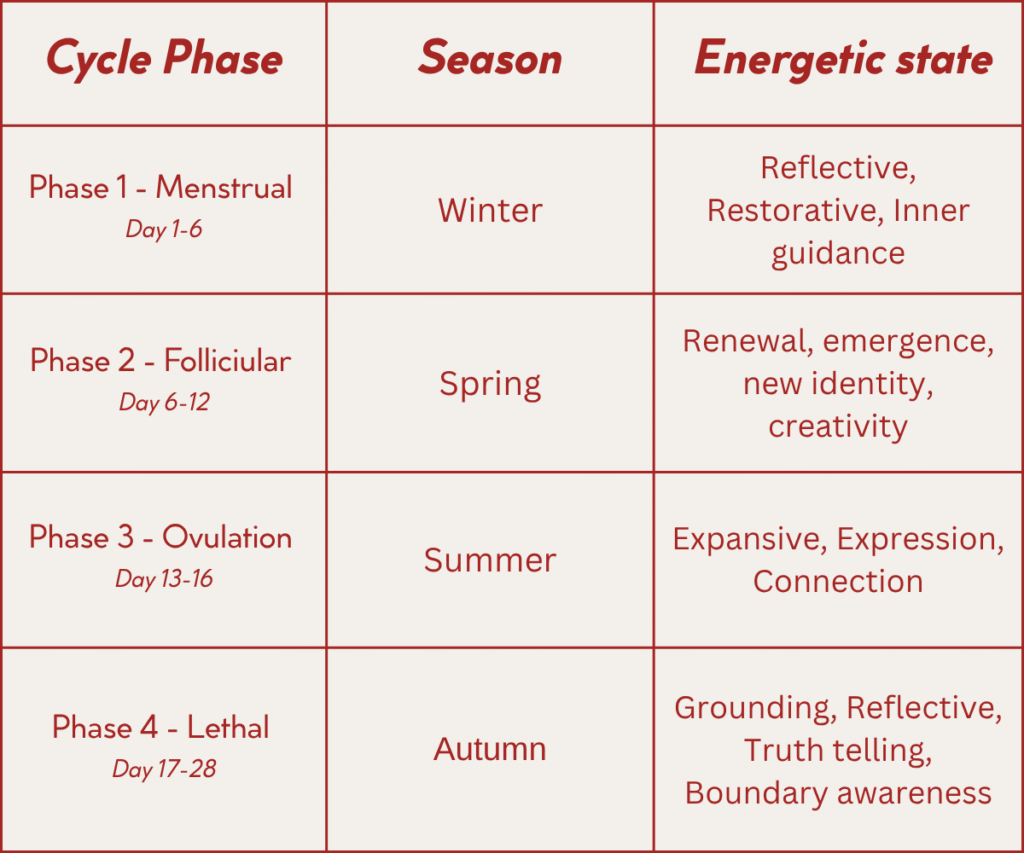
Each phase benefits from different foods, digestion styles, and metabolic support. So lets have a look at these
Phase 1: The Menstrual Phase (Winter)
Timeline – Days 1~6
During your period, oestrogen and progesterone are at their lowest. The goal of menstrual phase nutrition is to replenish lost iron and support the parasympathetic nervous system. When we bleed this is deep yin energy.
“What Foods Should I Eat During
my Period?”
Think restoration + mineral rebuilding.
Best Foods for Your Period:
Iron-Rich Foods: Grass-fed beef, bone broth, lentils, pate to support blood loss. This is the best time to take some extra liver capsules or iron supplements if you are prone to low iron.
Magnesium: Cacao, leafy greens and pumpkin seeds to help with uterine cramps.
Warmth: Focus on soups and stews to aid digestion and adding warmt to minimise cramp
Healthy fats – Stabilise blood sugar, support hormone production and nourish the nervous system – ghee, olive oil, avocado, Coconut oil
Herbs and Teas – nettle, ginger, raspberry leaf and cinnamon are all nurturing during this phase.
Example meals
Breakfast – eggs + sautéed greens + sourdough
Lunch – lamb and vegetable soup
Dinner – slow cooked beef + root veg
Snack – cacao + pumpkin seeds
Avoid: fasting, raw salads, lots of caffeine
Your body wants warm, dense nourishment.
Phase 2: The Follicular Phase (Spring)
Timeline – Days 6~12
During the follicular phase Oestrogen climbs and the liver begins processing hormone metabolites. The body is preparing to ovulate. Energy begins to rise and expand.
This is a great time for: lighter foods, detox support and fresh foods Think liver + microbiome support.
Supporting Oestrogen Clearance with Diet
After ovulation there is a big drop in Oestrogen, so right now we can prepare the body to clear this with our
- Cruciferous Vegetable – broccoli, cauliflower, kale, cabbage, brussel sprouts and broccoli sprouts
- Bitters to promote healthy liver and bowel function – rocket, radicchio, dandelion
- Fermented foods and polyphenols to support the microbiome – sauerkraut, kefir, kimchi, cacao, blueberries and wholegrains
- Lean protein easy to digest and not too much extra work for the liver – fish, eggs, chicken, legumes
Example meals
Breakfast – yoghurt + berries + seeds
Lunch – wild salmon + rocket salad + avocado
Dinner – stir fry with broccoli + ginger
Snack – apple + almond butter
Fasting can begin to feel easier here.
Dr Mindy Pelz often suggests 12–14 hour fasting windows here if tolerated.
Phase 3 – Ovulation Phase (Summer)
Timeline – Days ~13–16
Oestrogen and testosterone peak as the body is ready to release the egg. This is peak outward energy. Body tends to feel: warm, energized, outward facing. Socially we feel confident, communicative, and have a stronger desire for social connection. Foods can remain light and fresh.
Supporting Egg health with antioxidants and zinc rich foods
- Antioxidants- berries, citrus, colourful vegetables
- Fibre – vegetables, seeds, nuts, lentils and legumes, whole grains
- Hydration – cucumber, watermelon, herbal teas, coconut water
- Zinc rich foods – pumpkin seeds, oysters, seafood, eggs
Example meals
Breakfast – smoothie with berries + collagen
Lunch – large salad with chicken or salmon
Dinner – grilled fish + vegetables
Snack – berries + dark chocolate
Because insulin sensitivity is usually highest here, carbs are handled better.
Phase 4 – Luteal (Autumn)
Timeline – Days ~17–28
The Luteal Phase is often when women experience the most metabolic and emotional shifts. During the lutheal phase progesterone and oestrogen rise but if fertilisation doesn’t occur these hormones begin to fall. this normally shifts around day 21/22. It is this drop in these hormones (especially progesterone) that can bring on symptoms we commonly associated with PMS. Energy turns inward again and we feel less social and more comfort seeking.
Supporting Your Metabolism and Hormones
During this phase, your basal metabolic rate increases, meaning your body naturally burns 100–300 more calories per day. This is why “luteal phase hunger” is a real physiological response, not just a lack of willpower.
Best Foods for PMS, Bloating, and Cravings
To stabilise mood and reduce common PMS symptoms, focus on blood sugar balance and magnesium-rich foods.
Complex Carbohydrates: Foods like sweet potato, pumpkin, quinoa, and brown rice help the body produce serotonin (the “feel-good” hormone) and provide the steady energy needed to prevent sugar crashes.
Magnesium for Cramps & Sleep: Reach for dark chocolate (cacao), leafy greens, and almonds. Magnesium helps relax smooth muscles and may reduce the severity of upcoming period cramps.
B-Vitamins for Mood Support: Incorporate eggs, grass-fed meats, and nutritional yeast to support progesterone production and energy levels.
Anti-Inflammatory Fats: Omega-3 fish and walnuts can help reduce systemic inflammation that contributes to breast tenderness and bloating.
Luteal Phase Meal Ideas
Breakfast: Warm oats with walnuts, cinnamon, and ground flaxseeds.
Lunch: Roasted root vegetable and quinoa bowl with a creamy tahini dressing.
Dinner: Baked salmon or chicken served with sautéed kale and mashed sweet potato.
Healthy Snack: Apple slices with almond butter or a square of 70% dark chocolate.
What to Avoid in the Late Luteal Phase – Premenstrual
To keep your nervous system calm and reduce water retention, consider limiting:
Caffeine: Can exacerbate anxiety and breast tenderness.
Alcohol: Disrupts sleep and impacts liver detoxification of estrogen.
Refined Sugars: While cravings are high, excess sugar can lead to “the crash,” making irritability worse.
Naturopath’s Insight: If you find your cravings exploding right before your period, it’s often a sign of under-eating earlier in the day. Increasing your protein and healthy fat intake during your luteal lunches can significantly reduce evening sugar cravings.
Cycle synching and Perimenopause
This approach becomes even more powerful during perimenopause. According Alexandra Pope (co-founder of Red School, author of Wild Power and Wise Power) your menstrual cycle is teaching you how to work with your inner power… ready to become a wise woman at menopause.
Key shifts:
prioritise blood sugar stability
eat more protein in luteal
reduce fasting late cycle
What shows up:
- irritability
- intolerance
- questioning everything
- emotional intensity
Instead of suppressing these, she says: These are signals of misalignment and truth emerging
A death–rebirth process
With peri-menopause and menopause comes
- letting go of:
- people-pleasing
- over-giving
- old identities
- stepping into:
- authority
- clarity
- purpose
Summary
How Cycle Syncing Can Improve Hormones, Energy and PMS
Cycle syncing can help support hormone balance by aligning nutrition, lifestyle and activity levels with the natural hormonal changes that occur throughout the menstrual cycle. As oestrogen and progesterone rise and fall, our energy levels, metabolism and nutrient needs also shift.
By adjusting foods, exercise and daily routines to match each phase of the cycle, many women experience more stable energy, improved mood and fewer PMS symptoms. Supporting the body with the right nutrients at the right time may also help reduce cravings, improve sleep and support overall hormonal health.
Rather than pushing the body to function the same way every day of the month, cycle syncing encourages women to work with their natural rhythm.
Many women report improvements in:
energy and motivation
PMS symptoms
mood stability
sleep quality
food cravings
menstrual discomfort
Cycle syncing nutrition focuses on supporting each phase of the menstrual cycle with foods that nourish the body’s changing hormonal needs.
Is Cycle Synching for Everybody?
While many women find cycle syncing helpful, it is important to remember that every body is different. Nutrition and lifestyle recommendations that support the menstrual cycle may not be a one size fits all.
Cycle syncing tends to work best for women who have relatively regular menstrual cycles. If cycles are highly irregular, absent or significantly disrupted, it can be difficult to identify the different phases and adjust nutrition accordingly.
Certain life stages and health conditions may also influence how helpful cycle syncing is. For example:
• Hormonal contraception – the natural hormonal rhythm is altered, so the body may not move through the same hormonal phases.
• Perimenopause – hormone fluctuations can become less predictable, making strict phase-based approaches harder to follow.
• Irregular cycles or amenorrhoea – cycles may be absent or inconsistent, often due to stress, nutrient deficiencies or hormonal imbalance.
• Underlying health conditions – thyroid issues, PCOS, chronic stress or metabolic conditions may require more personalised support.
In these situations, focusing on overall hormone support, blood sugar balance, stress management and nutrient sufficiency may be more helpful than strictly following cycle phases.
Working with a qualified practitioner such as the naturopaths at Fremantle Natural Health, can help identify the underlying factors influencing hormonal health and determine the most appropriate approach.
How to Start Eating for Your Cycle
Looking for Naturopathic Hormone Support in Perth? Laura Hickey and the team at Fremantle Natural Health provide personalised cycle syncing plans tailored to your individual needs. We can educate and support you on this journey of connection with your natural rhythms, restoring health to your menstrual cycle and your sense of overall wellbeing.
Cycle Synching Summary
So overall:
Winter: nourish and restore
Spring: lighten and refresh
Summer: fresh and vibrant
Autumn: grounding and stabilising
Stay tuned for my next article where I will discuss why many women feel:
intuitive in luteal
creative in follicular
powerful in ovulation
deeply reflective during menstruation
Author Bio
Laura Hickey is a qualified Naturopath (BHSc) specialising in women’s health and hormones, skin conditions, digestion and paedeatrics – including ADHD, Down syndrome and Autism. She is curretly open for booking.