

Our body is giving us clues to our health everyday
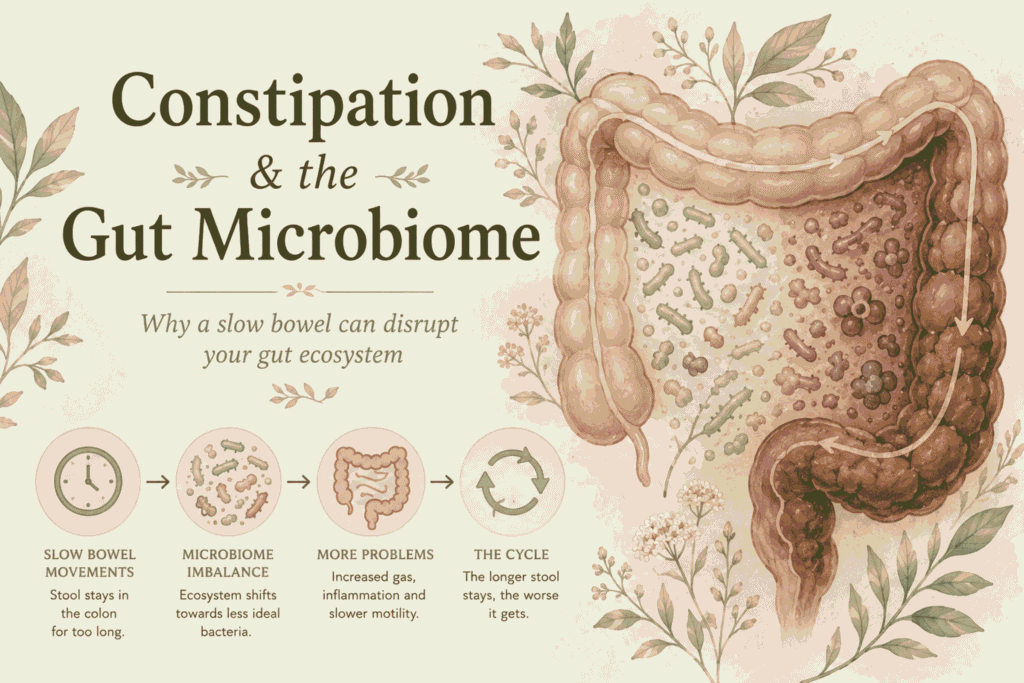
While many factors can contribute to an unhealthy microbiome, constipation itself is often one of the biggest drivers—and one of the most overlooked.
Constipation is often thought of as simply “not going to the toilet often enough.” In reality, chronic constipation can change the entire ecosystem living inside your large intestine.
Every day I review comprehensive stool microbiome analyses in clinic. One of the most common patterns I see is a loss of beneficial bacteria alongside an overgrowth of less desirable organisms. Many of these people experience symptoms such as constipation, bloating, IBS, reflux, abdominal discomfort, food intolerances and irregular bowel habits.
While many factors can contribute to an unhealthy microbiome, constipation itself is often one of the biggest drivers—and one of the most overlooked.
What is the microbiome?
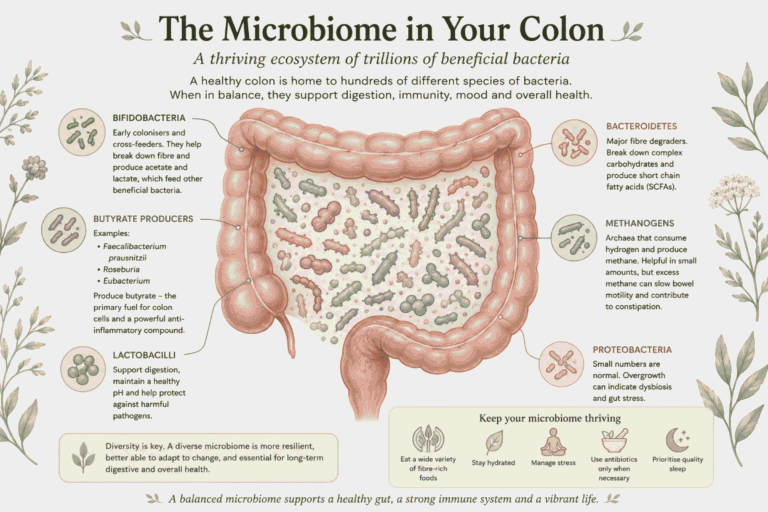
The gut microbiome is the community of trillions of microorganisms that live throughout your digestive tract. While we also have microbiomes on our skin, in our mouth and throughout the urinary and genital tracts, the vast majority of these microbes live in the large intestine.
Scientists have identified well over 1,000 different species of bacteria that can inhabit the human gut. Although every person’s microbiome is unique, a healthy gut is generally one that contains a wide variety of beneficial bacteria living in balance with one another.
In fact, we carry roughly as many bacterial cells as we do human cells, highlighting just how closely these microorganisms are linked to our health.
A healthy gut microbiome helps support many important functions, including:
- A healthy immune system (around 70% of the immune system is associated with the gut)
- Digestion and nutrient absorption
- Production of important nutrients such as vitamin K and some B vitamins
- Healthy bowel function and regular bowel motions
- Maintenance of the gut lining
- Production of beneficial short-chain fatty acids that nourish the cells of the colon
- Communication between the gut and the brain (the gut-brain axis)
- Metabolism
- Supports healthy hormone balance, including thyroid function
When the microbiome becomes imbalanced—a condition known as dysbiosis—it may contribute to symptoms such as:
- Constipation
- Diarrhoea
- Bloating and excess gas
- Abdominal discomfort
- Food intolerances
- Brain fog and difficulty concentrating
- Fatigue
- Reduced resilience to stress
- Altered mood and emotional regulation
The good news is that, unlike our genes, our microbiome is constantly changing. Every meal we eat, every antibiotic we take, our stress levels, sleep, exercise and bowel habits all influence which bacteria thrive and which begin to disappear.
What Damages the Gut Microbiome?
In our modern world there are many factors that can disrupt the gut microbiome. While some, such as genetics and birth method, are outside our control, many of the biggest influences are part of our everyday lives.
Antibiotics
Antibiotics can be life-saving medicines, but they don’t distinguish between harmful and beneficial bacteria. Each course has the potential to reduce microbial diversity and alter the balance of the gut microbiome.
The first two years of life are particularly important because this is when the microbiome is rapidly developing. Research has shown that antibiotic exposure during infancy is associated with long-term changes to the gut microbiome and an increased risk of conditions including asthma, eczema, allergies and childhood obesity. This doesn’t mean antibiotics should never be used—they can be essential – but they should be prescribed appropriately and the microbiome supported during and afterwards.
Chlorinated Tap Water
There isn’t a lot of evidence out there that suggests chlorine has a negative impact on our microbiome. But if you can get a good quality water filter, I’m sure it will only benefit your microbiome and the good bacteria within.
A Diet High in Fat and Protein but Low in Fibre
Beneficial bacteria rely on dietary fibre as their main food source. Diets that are high in animal protein and fat but low in fibre reduce the production of beneficial short-chain fatty acids (SCFAs) such as butyrate. Over time this creates an environment that is less favourable for beneficial bacteria and more favourable for opportunistic organisms.
Not Enough Variety
Different bacteria feed on different plant fibres. The more variety of vegetables, fruits, legumes, nuts, seeds and herbs you eat, the greater the diversity of your gut bacteria. Research suggests that people who eat around 30 different plant foods each week tend to have a more diverse microbiome.
Not Enough Fibre
When fibre intake is too low, beneficial bacteria produce fewer short-chain fatty acids. These acids normally help keep the colon slightly acidic. Without them, the environment becomes less favourable for beneficial bacteria and allows less desirable microbes to gain a competitive advantage.
Stress
Your gut and brain are closely connected. Chronic stress can slow digestion, alter bowel habits, change immune function and reduce microbial diversity. Many people notice their digestive symptoms worsen during periods of prolonged stress.
Parasites and Gut Infections
Parasites, harmful bacteria and some gut infections can significantly alter the microbiome. They may compete with beneficial bacteria for nutrients, damage the gut lining, trigger inflammation or change the environment within the bowel. While not every parasite causes major disruption, chronic infections commonly reduce microbial diversity and encourage the growth of opportunistic bacteria.
Constipation
Constipation is both a symptom and a cause of an unhealthy microbiome. When stool remains in the colon for too long, the bacterial ecosystem changes. Beneficial fibre-fermenting bacteria begin to decline, while methane-producing organisms and opportunistic bacteria become more abundant. This can create a cycle where constipation worsens the microbiome, and an unhealthy microbiome further slows bowel function.
Why is constipation bad for your gut?
Many people think constipation is simply about not going to the toilet often enough. In reality, a slow-moving bowel can change the entire ecosystem living inside your large intestine.
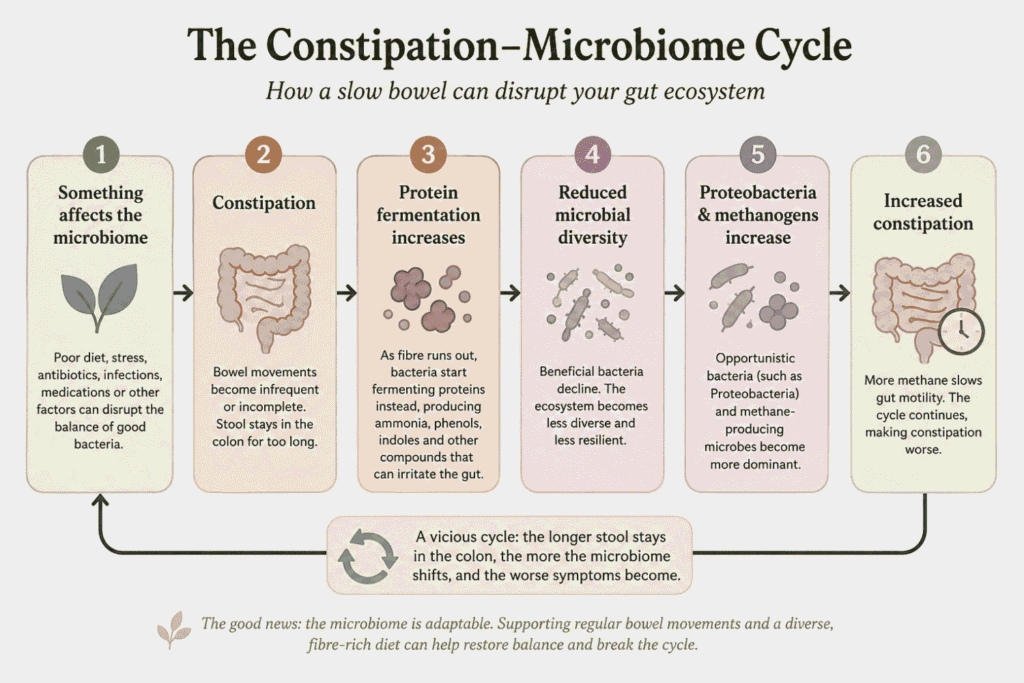
When stool remains in the colon for longer than normal, the bacteria living there have more time to interact with it. As the easily fermentable fibres become depleted, many microbes begin fermenting proteins instead. This changes the balance of chemicals being produced within the gut.
Protein Fermentation
Beneficial bacteria primarily ferment dietary fibres, producing compounds called short-chain fatty acids (SCFAs) such as butyrate, acetate and propionate. These compounds nourish the cells lining the colon, help maintain the gut barrier and create an environment that supports beneficial bacteria.
However, when bowel transit is slow and fibre becomes depleted, protein fermentation becomes more dominant. This can increase the production of compounds such as:
- Ammonia
- Phenols
- Indoles
- Sulphur-containing compounds
These compounds are a normal part of digestion and are not harmful in small amounts. However, when they become the dominant end products of fermentation, they may contribute to irritation of the gut lining, inflammation and altered communication along the gut-brain axis. Some people experience symptoms such as brain fog, fatigue or reduced concentration, children can experience more frequent emotional dysregulation.
Reduced Microbial Diversity
A healthy microbiome is diverse, with hundreds of different bacterial species working together.
A slow-moving bowel tends to favour:
- Methanogens (methane-producing archaea)
- Certain Proteobacteria
- Opportunistic bacteria
At the same time, many beneficial fibre-loving bacteria begin to decline.
Methanogens
Methanogens are not bacteria—they belong to a separate group of microorganisms called archaea. Their role is to consume hydrogen produced by other gut microbes and convert it into methane gas.
While this is a normal process, excessive methane production has been associated with slower bowel transit. In fact, studies have shown that people with higher methane levels are more likely to experience chronic constipation.
This creates a vicious cycle:
Constipation → More methane production → Slower bowel movements → More constipation
Proteobacteria
Proteobacteria are sometimes described as the “weeds” of the microbiome.”
Small numbers are completely normal and form part of a healthy gut ecosystem. However, when they begin to dominate, it often suggests that the gut environment is under stress.
Examples include:
- Escherichia coli
- Klebsiella
- Enterobacter
- Citrobacter
- Salmonella
Problems usually arise when they become overabundant and crowd out more beneficial bacteria.
Other opportunistic organisms that may increase include species of Clostridium and Desulfovibrio.
Why Microbial Diversity Matters
Think of your microbiome like a thriving forest rather than a single plant.
Some bacteria are responsible for breaking down complex fibres into smaller compounds such as acetate and lactate. Other beneficial bacteria then use these compounds to produce butyrate—one of the most important nutrients for the cells lining the colon. This process is known as cross-feeding.
When one group of bacteria begins to disappear, it doesn’t just affect that species. It disrupts the entire food chain within the microbiome. Over time, the ecosystem becomes less diverse, less resilient and less able to support digestion, immunity and overall health.
The Good Guys That Begin to Disappear
As constipation persists and less desirable microbes become more abundant, many of our beneficial bacteria begin to decline.
Bifidobacteria
Often one of the first groups to decline, Bifidobacteria play several important roles:
- Ferment dietary fibre
- Produce acetate and lactate, which feed other beneficial bacteria (known as cross-feeding)
- Help maintain the protective mucus layer lining the intestine
- Support healthy immune function
Butyrate-Producing Bacteria
These bacteria are among the most important organisms in the gut because they produce butyrate, one of the primary fuel sources for the cells lining the colon.
Examples include:
- Faecalibacterium prausnitzii
- Roseburia
- Eubacterium
Healthy levels of these bacteria are associated with reduced inflammation, a stronger gut barrier and a healthier microbiome overall.
Over time, chronic constipation shifts the gut ecosystem away from one dominated by beneficial fibre-fermenting bacteria towards one that favours slower-growing, protein-fermenting and methane-producing organisms.
This is one of the reasons why treating constipation is about far more than simply increasing bowel frequency—it’s about restoring a healthy microbial ecosystem.
This article was written by Laura Hickey, BHSc (Naturopathy), Kinesiology (Dip)
Laura is a degree-qualified naturopath, Kinesiologist and founder of Fremantle Natural Health. She has over 14 years of clinical experience helping adults and children improve digestive health, restore the gut microbiome and address the underlying causes of chronic health conditions.
Laura has a special interest in gut health, allergies, children’s health and microbiome restoration, combining evidence-informed nutritional medicine with traditional naturopathic principles and kinesiology to help her patients achieve lasting improvements in health.